
Introduction
Let me take you back. It’s 2005. Your internet still makes that screeching sound. Your phone flips. Social media means arguing with a stranger on a forum and waiting an hour for a reply. Then, someone sent you a link: “Check out my Stickam.” You clicked. And there he was, your friend Dave, living in his dorm room, waving at your through a blurry webcam.
That jolt of real-time, person-to-person connection through a browser window—it felt like magic. For a bunch of those, Stickam teens stumbling into this new digital space, it was the future.
This review explores what Stickam was, its key features, why it closed, and other details of it. Let’s explore this excellent platform together!
What It Stickam
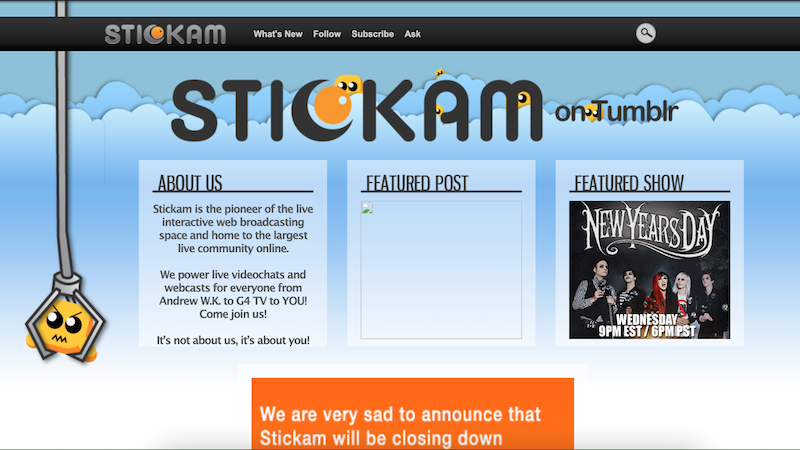
Stickam wasn’t an interactive video platform. It was the first place where online and hanging out meant the same thing. You didn’t just post a status; you were a status, live and unedited. The tech was clunky—it ran on Adobe Flash, which meant your laptop fan would scream in protest—but it worked. The killer feature? That little embeddable player. You could “stick” your live cam feed right onto your MySpace profile. Your page wasn’t just a collage of songs and glitter graphics anymore; it was a TV channel. Your TV channel.
It exploded. Not among techies, but among kids. You’d log on after school and see the same crowd: the scene kids with elaborate hair in their bedrooms, the guy in his garage trying to play guitar, the group of friends just laughing into their cams. You built a friends list. You hosted shows. The culture was raw and self-made. The term Stickam girl emerged later as a lazy media label, but on the ground, it was mostly young people, figuring out how to be themselves in front of a lens.
Key Features of Stickam
The features list sounds standard now. Back then, it was revolutionary.
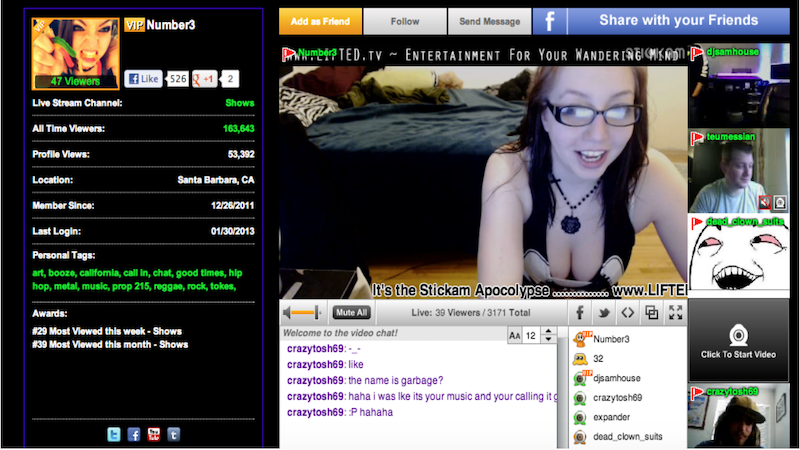
🥰Chat Room
This was the heart. You’d go live, and friends would join you. Their video feeds would pop up in boxes next to yours, creating a messy, Brady Bunch-style grid. You’d talk, play music from your desktop or just sit there doing homework together. It was ambient presence.
😜The Shuffle
Added around 2010, this was the forbidden button. Click it, and you’d be randomly connected to another live user, one-on-one. It was thrilling, weird, and often awkward. It felt like the pure, chaotic id of the internet.
🤗The Profiles
They were customizable like MySpace, but with live feed front and center. Your profile wasn’t a resume; it was a lobby where people waited for you to come online.
✨This ecosystem made celebrities. Not global ones, but local internet-famous ones. Bands like Underoath did live sessions. But more importantly, your friend who was funny on cam could have 50 regular viewers. It felt like community.
Why Did Stickam Shut Down?
When Stickam video shut down in early 2013, the official post was a quiet “thank you and goodbye.” The truth was messier. It was death by a thousand cuts.
-
The Tech Died: The entire web moved to HTML5 and mobile. Stickam was a Flash artifact. You couldn’t use it on an iPhone. Game over.
-
The World Caught Up: Facebook, Twitter, and YouTube baked live video into their apps. Why go to a separate site when you could broadcast to your existing friends?
-
The Money Ran Out: Video streaming is brutally expensive. With its reputation in tatters, premium advertisers wanted nothing to do with it. The ad revenue couldn’t keep the lights on.
-
The Spirit Was Poisoned: After the safety failures and the adult-site revelations, the trust was gone. The cost of cleaning it up—real moderation, legal safeguards, PR—was more than anyone was willing to pay. The community’s own sense of innocence was shattered.
Conclusion
Stickam’s journey is a standard dot-com parable: it arrived early, sketched the pattern for creator-led live feeds, then fell under new technology, fiercer rivals, and its own safety errors.
Newer platforms now fill the void left by its demise with more robust guardrails and crisper coding. Although we are unable to rewatch the original streams, we can thank the service for demonstrating—well in advance of its time—that life on the internet is best enjoyed live.
FAQs
Was Stickam just for random chat like Omegle?
Not at all. Omegle is anonymous and random by design. Stickam was built on identity. You had a profile, friends, and followers. It was a social network where the main feature was live video. The “Shuffle” was a later, added feature that borrowed from the random chat concept.
What’s the deal with “Stickam porn” in search results?
This is crucial to understand. It mostly doesn’t refer to user activity. It stems from 2012 news investigations that exposed the business ties between Stickam’s parent company and adult entertainment sites. This corporate link permanently associated those search terms with the platform’s name, damaging its reputation regardless of what most users were actually doing on it.
Why did teens love it so much?
It was the first space that felt truly ours and truly live. Before curated Instagram feeds and algorithmic TikTok, it was raw, real-time self-expression. You could be a creator, a community host, or just a participant with zero polish. For Stickam teens, it was an unprecedented digital clubhouse.
What are the best Stickam alternatives ?
If you want pure, anonymous randomness, try Spinchat. For more control with filters, check out 1v1 Video Call. If a strong reputation/rating system is your priority, Knuddels is a solid Stickam alternative.